
One hundred and twenty-eight dollars bought me exactly one bottle of weight loss supplements last month — and for once, the price didn't feel like the scam. Almost everything else on my shelf hides behind a proprietary blend, that little box on a supplement label where a company lists five or six ingredient names, slaps one combined milligram number underneath, and calls it a day. This bottle didn't do that. Between grocery runs through the Hawthorne District along SE Hawthorne Boulevard and a kitchen counter that's slowly become an accidental museum of half-used pill bottles, I've spent a good chunk of my Portland life staring at ingredient panels — enough to know the difference between a label that respects you and one that's betting you'll never read past the front of the box.
Quick note before anything else: this site runs on affiliate links, and if you buy through one of mine, I earn a small commission at no extra cost to you. I only link to things that have actually sat on my kitchen counter, not products a company paid me to mention. To be clear up front, I'm not a doctor or a scientist — just someone who reads ingredient panels for fun and got tired enough of the marketing fog to start writing about it. Talk to an actual medical professional before changing anything about what you're swallowing based on a blog post, mine included.
What Actually Is a Proprietary Blend?
A proprietary blend is a legal loophole dressed up as a formula. Instead of listing each ingredient with its own dose — say, 200mg of green tea extract, 50mg of caffeine anhydrous, whatever it happens to be — a company groups several ingredients under a made-up name like "Thermo Complex" or "Energy Matrix" and discloses only the combined weight of the whole group. That part is completely legal. Nobody requires a company to break the group down further, which means a label can say "500mg blend" without telling you whether that's 480mg of cheap filler and 20mg of the ingredient you actually bought the bottle for. Once you understand that one trick, you start noticing it everywhere — on grocery shelves, in ads, tucked into the fine print of products that otherwise look completely legitimate.
Peel back one of these labels. There's often a second layer of fine print stuck underneath the main one, and I've gotten used to the faint resistance of that adhesive letting go right before the real ingredient list shows up. You'll sometimes find whole-food extracts buried inside the blend that deserve their own attention. Bitter melon turns up in a few of these formulas, usually at a dose too small to do much of anything, which is sort of the whole point of hiding it in a blend in the first place.
Why Companies Hide Behind the Blend Name
Marketing teams love the word "synergistic" because it sounds like science while meaning almost nothing. Think of it like a curry. If I told you my curry has a synergistic spice blend but wouldn't say how much cumin versus chili went into it, you'd have no way to judge whether it's going to taste balanced or like a mouthful of dirt. Proprietary blends work the same way — they let a company imply strength without ever proving it, and they make it nearly impossible to compare one product against another on anything except the price printed on the shelf tag.

Paying More for CitrusBurn's Transparent Label
CitrusBurn is the bottle that actually broke the pattern for me, and it's the one I keep coming back to whenever someone asks if paying more is ever justified. I wrote up the full ingredient-by-ingredient version in my $128 CitrusBurn experiment if you want the deep cut, but the short version is this: every citrus extract on that label carries its own listed weight instead of disappearing into a blend box, right down to the citrus-derived flavonoid compounds that show up by name and by number instead of vanishing into a total. That let me check whether the amounts lined up with what independent testing sites consider a reasonable dose. The honest tradeoff: it costs more than most of what's cycled through my kitchen, and the capsules run bigger than I'd like if swallowing pills isn't your favorite pastime. But if what you're actually paying for is the ability to verify the label yourself, that premium is the whole product.
Does the Budget Route Ask Less of You?
Not everyone wants to spend three figures on a bottle of pills, and that's a completely fair place to land. A structured plan like the Best 21 Day Smoothie Diet Plans in Portland sidesteps the proprietary-blend problem entirely, because you're working with whole ingredients you can see and measure yourself instead of a capsule you just have to trust. It won't do the cost-per-serving math for you the way a labeled supplement can — that's really a separate conversation — but it removes the guessing game about what's actually in front of you. If decoding a supplement label sounds exhausting, this is the honest alternative, not a downgrade.
Whose Advice Do You Actually Trust?
My neighbor Leon knocked on my door one evening holding a fat burner his gym trainer had just sold him. Turned out the trainer earned a commission on that exact product, which doesn't automatically make it garbage, but it's precisely the kind of relationship that should push you to check the label yourself instead of taking the recommendation at face value. Leon's been reading Examine.com summaries on his lunch break ever since, which is either a small win for label literacy or a sign I've ruined his relationship with his own gym — I genuinely haven't decided which.
Owen, who works the floor at a natural foods co-op a few blocks from my place, fields a version of this same question from customers all the time, usually about a bottle he's never heard of. He trusts smell and color over whatever's printed on the box, which isn't a system I'd personally recommend, but it isn't entirely wrong either — a blend that's mostly filler often does smell like almost nothing. Between the two of them, I've noticed the same pattern show up whether we're talking about a supplement aisle or the whole-food remedies I picked up traveling through Southeast Asia: people who trust a name or a story over an actual number tend to end up disappointed.
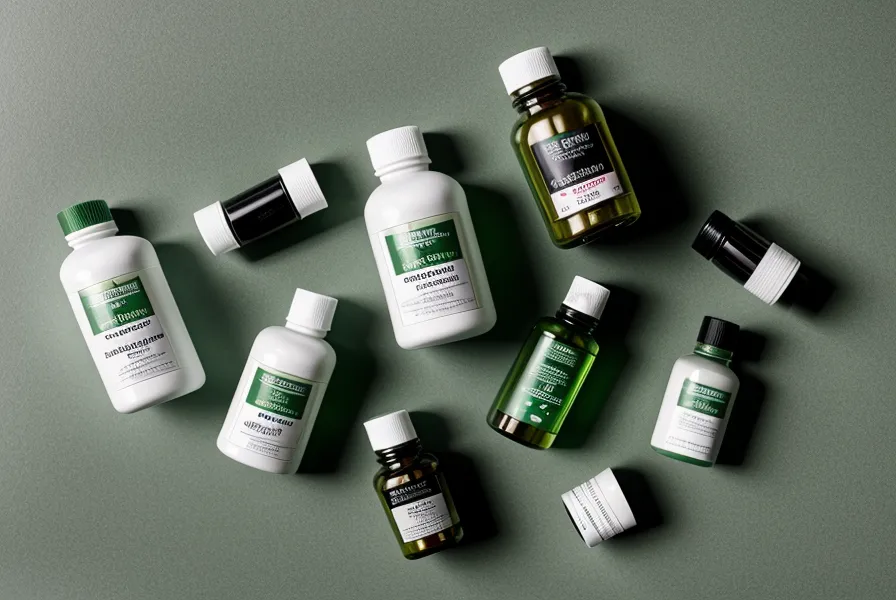
The Diet Plan That Didn't Fix Anything
Before labels became this much of an obsession, I spent three straight months doing strict 16:8 intermittent fasting, convinced that timing alone would out-perform anything sold in a bottle. It didn't. Progress stalled hard, and no amount of shifting the eating window earlier or later moved the needle again. That failure taught me something that has nothing to do with fasting windows: whatever method you choose — capsule, smoothie, or skipping breakfast — the plan only works as well as your ability to know exactly what you're doing to your body, and an eating schedule doesn't tell you that any more than an unlabeled blend does.
Read the Back of the Bottle First
These days I walk straight past the granola bars stacked at the checkout lane without a second glance, not because I've developed some iron will, but because the real decision already happened back in the aisle, in front of the label. If a gut-health angle interests you more than straight stimulants, I wrote about that path in my LeanBiome journey, which sidesteps the whole energy-blend question. The general mechanics of reading a supplement label front to back is its own separate skill I've covered elsewhere — here, I only care about the one word that should make you put a bottle back on the shelf.
Whatever you end up choosing, read the ingredient panel before the price tag or the promise on the front. The front is written by a marketing department; the back is written for you, assuming the company is actually required to tell you what's in it. My full breakdown of options that skip the proprietary game entirely lives in Best Natural Fat Burner Supplements Without Proprietary Blends, if you want to keep pulling this thread. Stay skeptical of anything that won't show you its ingredients in plain numbers — that's the entire test, and it's the only one that's ever actually saved me money.
All opinions and observations on this site are my own and are shared purely for informational purposes. They do not constitute professional medical, financial, or legal advice. Please consult the relevant professional before acting on any information presented here.