
A vendor at the Saturday Market under the Burnside Bridge will tell you exactly what's in the hot sauce he's selling — the pepper variety, the vinegar ratio, how long it sat before bottling. A supplement label making the same kind of promise (more energy, fewer cravings, a flatter stomach) usually won't tell you a thing beyond one combined number covering eleven ingredients. That gap is label transparency in a nutshell, and it's also where most supplement scams quietly live.
Quick disclosure before we go further: this site runs on affiliate links, and if you click through and buy something I may earn a commission at no extra cost to you. I only link to things I've actually tried myself, and nothing here replaces an actual conversation with your doctor — especially if you're managing a health condition.
The Myth: 'Proprietary' Just Means They're Protecting a Good Recipe
Here's the myth, and I believed it myself longer than I'd like to admit — a "proprietary blend" sounds like a company protecting something valuable, the way a restaurant keeps its sauce recipe locked in a binder. Framed that way, it almost sounds reasonable. Keep your secret, just sell me the result.
The reality is closer to a shell game. A company can list eleven ingredients under one umbrella number and never tell you how that number splits between them, so you could be paying for a gram of cheap filler and a pinch of the ingredient you actually wanted. That's not protecting a formula; that's protecting a profit margin, and there's a long-standing legal gray area that lets them get away with it without technically lying on the label.
What Label Transparency Actually Looks Like
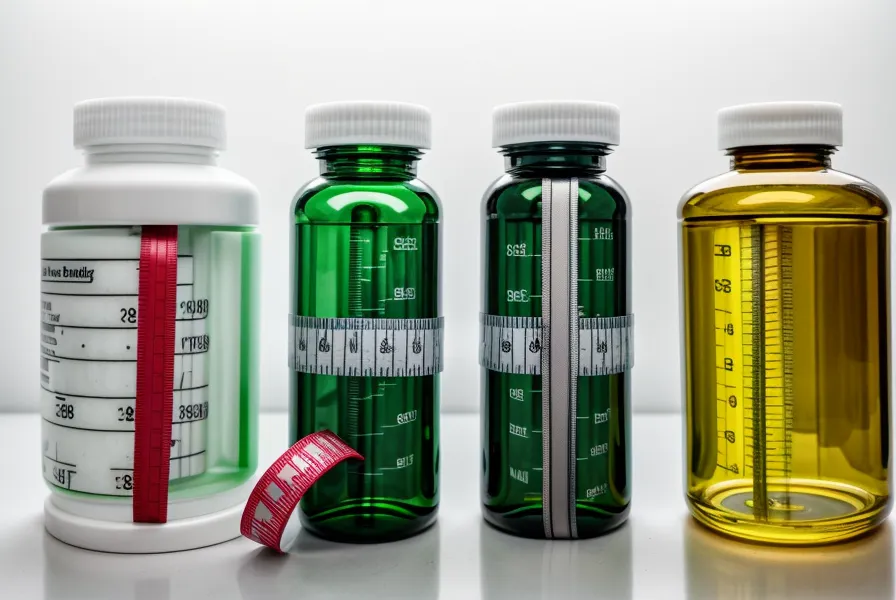
Label transparency, the actual kind, looks almost boring by comparison. Every ingredient gets its own line and its own milligram count, no grouping, no asterisk pointing to a footnote that explains nothing. Once I started shopping that way, I drifted toward single-ingredient extracts almost by default, because a bottle with one thing in it can't exactly hide the dose.
Somewhere in there I started living by what I now call the Portland Rule — if I can't see the milligram count, it doesn't go in my cart, no matter how good the marketing copy sounds. It's the same logic as buying dried citrus peel by the gram from an overseas apothecary instead of a mystery "vitality tonic" in a dark bottle. You know exactly what you're getting either way, but only one version respects you enough to show the math.
Why I Stopped Trusting the Black Box
For a while, I had a monthly subscription box showing up on my porch — an appetite-suppressant stack built entirely on a proprietary blend with a name like "Metabolic Ignition Stack." It wasn't cheap, and cracking a fresh bottle open always came with a thin, vaguely medicinal whiff before the capsule even touched my tongue. Months of it did nothing I could point to: no change in cravings, no change on the scale, just a steadily shrinking supply of patience.
The moment that actually convinced me to quit was smaller than I expected. I sat through a long afternoon meeting without a drop of caffeine in me, no coffee, no pre-workout, nothing, and realized halfway through that I was still sharp while everyone else at the table was fading. That's when it hit me how much of my old "natural energy" had probably been borrowed from a stimulant dose I never saw listed anywhere.
My friend Derek, who got just as obsessive about ingredient lists as I did after a routine checkup rattled him a few years back, won't even look at a new product until I can tell him the cost per serving of the actual active ingredient, not the sticker price on the box. It's a habit I've stolen from him completely, and it's the fastest way I know to spot a blend that's mostly filler wearing an expensive label.
A reader named Edgar emailed me a while back after his cardiologist flagged some numbers that worried him, wanting a second opinion before he kept ordering the same popular fat burner he'd been buying blind for months. He told me he reads every review twice before he'll order anything now, which is honestly the right instinct — the label is the only part of the transaction that isn't trying to sell you something.
Does This Problem Stop at Fat Burners?
It doesn't, and that's the part that still annoys me. A fiber supplement that won't say how many grams are doing the actual satiety work is playing the same game with a healthier-sounding ingredient. A carb blocker leaning on white kidney bean extract has the same blind spot if it won't show the actual enzyme-inhibiting dose. Even the bloating-relief teas marketed for a flatter stomach can sometimes be a mild laxative effect dressed up as fat loss, and a blend label makes that almost impossible to catch before you buy.
Thermogenic blends do it too — stacking several "heat-producing" ingredients under one number so you can't tell if you're getting a meaningful dose or a sprinkle. Garcinia cambogia products are notorious for the same trick unless they specify the actual HCA percentage, and green tea extract needs its dose disclosed as well, since how much you're taking changes how your body handles it. Citrus polyphenols — the hesperidin and naringin I mentioned earlier — fall into a gentler category, but I'd still rather see the milligrams than take a company's word for it.
Probiotic blends for gut health have their own version of this problem, since a strain count only matters if enough of it survives to actually reach your gut alive — a microbiome-focused product that won't disclose that number is asking for blind trust. Apple cider vinegar gummies run into the filler question constantly, since sugar and binders can quietly make up most of what you're chewing. Blood-sugar-focused ingredients like bitter melon and berberine deserve the same scrutiny, because dosing matters more there than almost anywhere else.
A smoothie-replacement reset has a different version of the same honesty problem — it's less about hidden milligrams and more about hidden trade-offs, and you deserve to know what you're giving up before you commit to a month of it. Trial length matters here too, since a single week tells you almost nothing about a supplement, and a company that only shows you glowing one-week testimonials is hoping you won't notice. If you'd rather sip something than swallow a capsule, the best metabolism boosting tea for women is worth a look, as long as you keep reading the fine print on what's actually in the bag.
Calculate the Real Cost Before You Buy
My desk corner in the Pearl District has a west-facing window that floods the keyboard with light by mid-afternoon, and I keep a digital kitchen scale right next to it for exactly this reason — spot-checking serving sizes instead of trusting the label blindly. Bottles line up along the windowsill in the order I started testing them, and a rolling whiteboard nearby tracks which ones are still in rotation. That setup is how I ended up spending real time with CitrusBurn, which lists its citrus polyphenols — hesperidin and naringin — by the actual milligram instead of folding them into a "proprietary complex."

What sold me wasn't a bold claim on the front of the box — it was the boring Supplement Facts panel on the back doing exactly what it's supposed to do. Single-ingredient sourcing makes that kind of honesty possible in the first place, since a company selling you one thing has nowhere to hide a weak dose, while a twelve-ingredient "complex" always has room to bury the cheap stuff. Reading labels is a skill nobody teaches you, but it's the only one that actually protects your wallet and your sleep at the same time.
Here's the actual math I use now, and it's not complicated: take the price of the bottle, divide it by the number of servings, then divide again by how many milligrams of the one ingredient you actually care about you're getting per serving. If a company won't give you that last number, the math is impossible to run, and that alone tells you everything you need to know about why they're hiding it. I'd rather pay more for something I can calculate than save a little on something I can't.
What I'd Tell You at the Market
If you caught me at the Saturday Market under the Burnside Bridge and asked what I actually look for in a weight loss supplement, I'd probably talk your ear off about milligrams until you regretted asking — it's a known flaw of mine, just ask anyone who's had to stand next to me in a vitamin aisle. But the short version is simple: read the panel, run the cost-per-serving math, and walk away from anything that calls itself a "complex" or a "matrix" without showing its work.
Oolong tea fans aren't exempt from this either — a specialized oolong tea still needs to disclose what's actually in the leaf blend before I'd trust it over a straight extract. And if you want to see what a fully disclosed citrus-based option looks like in practice, CitrusBurn is still the one I keep coming back to, mostly because I can actually do the math on it without emailing customer service for answers that should've been printed on the label in the first place. Stay skeptical, read the fine print, and I'll see you at the next market stall that's more honest than the supplement aisle.
All opinions and observations on this site are my own and are shared purely for informational purposes. They do not constitute professional medical, financial, or legal advice. Please consult the relevant professional before acting on any information presented here.