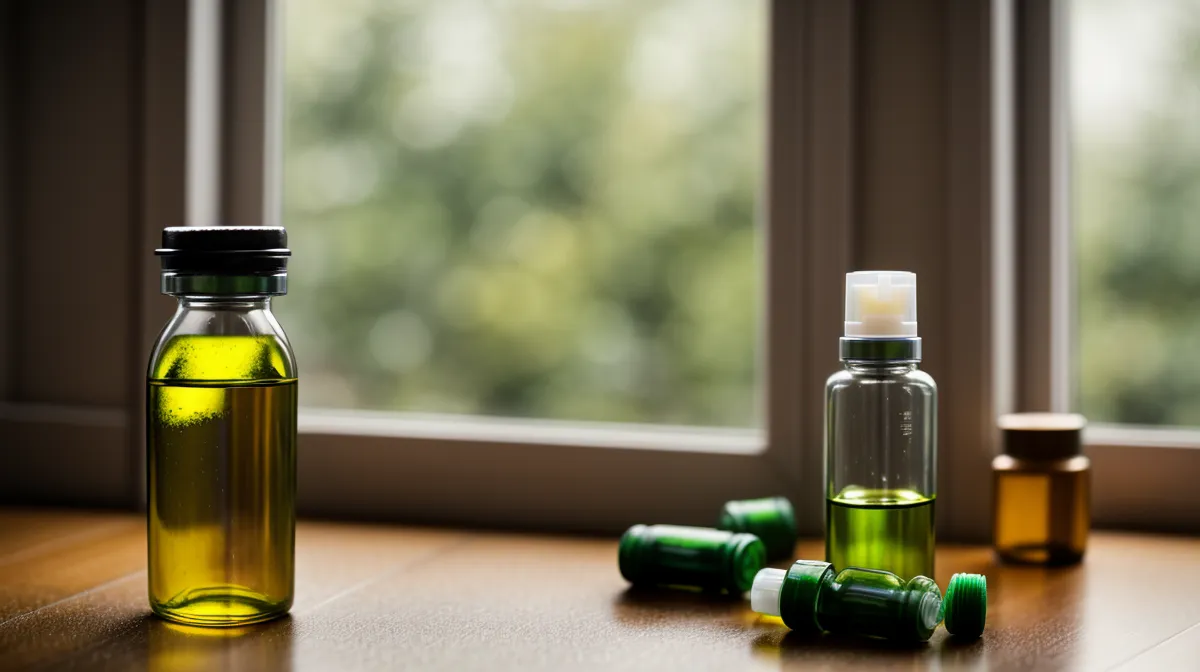
Twelve ingredients, one total milligram count. That's usually the whole story a "Metabolism Matrix" label is willing to tell you, and it's exactly why proprietary blends have become the thing I trust least among weight loss supplements. Ask a bottle claiming to be a metabolic complex for a straight answer on how much of anything it actually contains, and watch it dodge the question like a poker player holding a bad hand. Supplement transparency isn't some fringe hobby for me anymore. It's closer to a reflex, the same one that makes you pop the hood before trusting a used car's odometer, or ask a chef what's actually in the sauce before you order the special.
Weight Loss Supplements Don't Need a Secret Recipe
Here's the myth I want to correct, because it's the one that keeps this entire category profitable: people assume a "proprietary metabolism blend" must be doing something more powerful than the same ingredients would do on their own, and that hiding the exact recipe is just smart competitive strategy, nothing to actually worry about. Companies can legally list ingredients under something like the FDA Supplement Labeling Regulation without disclosing how much of each one is actually inside, which is its own tangle I've picked apart elsewhere on this site. That amount-hiding isn't even the real problem, though. The real problem is what it lets a company get away with: a bottle that reads like a lab breakthrough on the front and performs like a pinch of seasoning on the back.
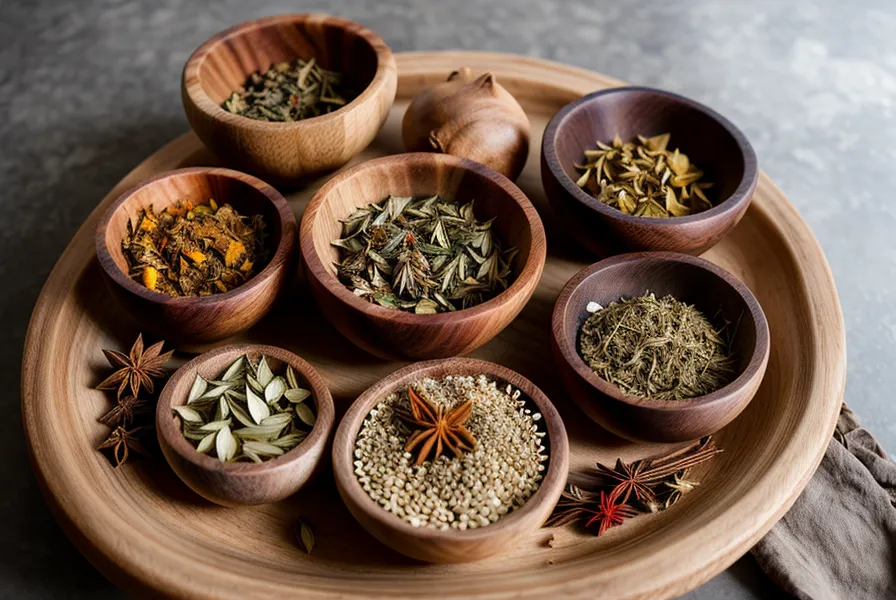
Years spent traveling through Southeast Asia taught me that herbs sold loose, by weight, from vendors with no marketing department attached, don't need a blend name to prove they're real. You can smell the difference, and that's a longer story I've told in more depth elsewhere. Back home, "blend" often functions as a curtain instead of a shortcut, and once you notice that, you can't unsee it in almost every aisle of a supplement store.
'Metabolism Support' Often Means Nothing
I'm not a doctor, and I won't pretend to explain what any of these ingredients do inside your body at a biological level. That's not my lane, and anyone selling you a confident mechanism in a blog post should make you a little suspicious. What I can tell you is what I noticed testing dozens of these products, ingredient by ingredient, over time: even when I knew exactly what dose I was taking, "metabolism support" rarely produced anything I could point to and measure. Energy shifted sometimes. Appetite shifted sometimes. My actual metabolic rate, whatever that even means day to day, was never something a capsule visibly moved.
None of that made me faster on the Wildwood Trail loop I do most weekends out in Forest Park, and I'm suspicious of anyone who tells you a bottle will fix that for you. If a supplement is going to earn a spot on my shelf, it has to prove itself against a much smaller, much more honest question: can I actually tell what it's doing, and at what amount? A blend can't answer that. A single, clearly labeled ingredient can.
Cracking a Capsule Open to See What's Really Inside
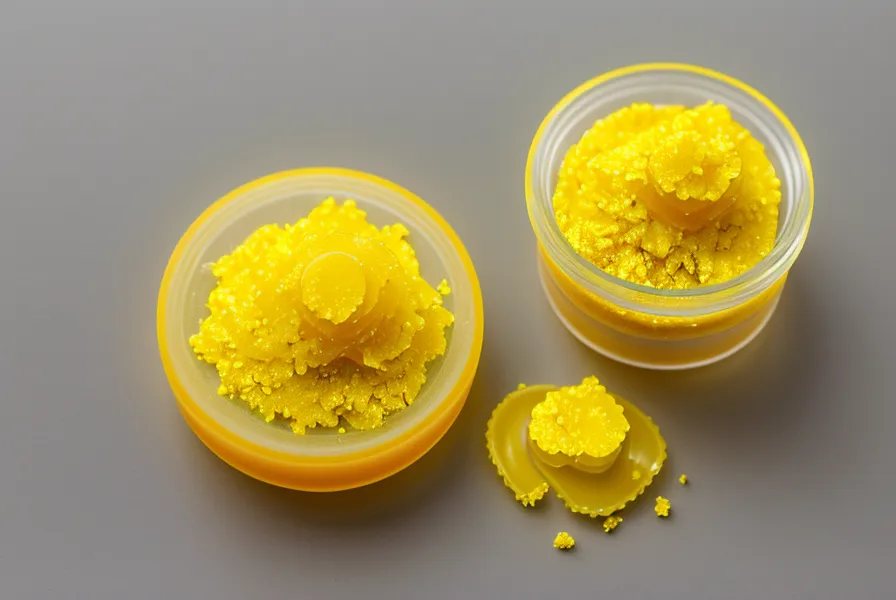
There's a specific smell to a freshly opened supplement bottle, not quite medicinal, not quite food, just a faint synthetic edge that clings to your fingers for a minute, and I've started treating it as its own kind of clue. Pure Berberine, when you crack a capsule and tap it out onto a plate, is a shockingly bitter, almost neon-yellow dust that stains skin on contact. A blend capsule, by comparison, usually taps out as a dull beige powder that smells mostly like black pepper, which is a common (and mostly harmless) absorption aid, but also a very effective way to mask what else isn't in there.
Cracked open, a capsule doesn't hold much to begin with, maybe a pinch, maybe two, depending on how tightly the powder is packed. So when a label brags about fifteen different superfoods stuffed into a single capsule, the physical math already tells on itself before you read a single ingredient name. You're not getting fifteen meaningful doses. You're getting fifteen token appearances, most of them there for the ingredient list, not for you.
One entire Saturday afternoon disappeared into photographing capsule powder next to a kitchen ruler like I was processing a crime scene, a strange way to spend a weekend, and honestly more compulsion than system at this point.
What Actually Changed Once I Stopped Guessing
My neighbor stopped me by the mailboxes a few months back and asked, kind of sideways, if I'd changed something. She couldn't point to what exactly, just that something read differently. I hadn't done anything dramatic. I'd stopped buying bottles I couldn't audit, and started buying ones I could.
Before any of this turned into a habit, I tried the opposite extreme, a thirty-day juice cleanse from a Portland juicery, the kind that promises a full reset if you just commit. I finished it lighter on patience than on anything else, hungrier in a way that had nothing to do with willpower, and none of it taught me a single thing that a scale and an honest label couldn't have taught me in a week.
A friend named Mitch is a good gut check on all of this. I originally knew him only from arguing about supplement labels in an online forum, long before he passed through Portland for work and we finally met in person. He won't touch anything with a celebrity's face stamped on the box, blend or not, and he's usually right to be that stubborn about it.
Sumit is another one, a fellow supplement tracker who found his way to my site through a Reddit thread comparing probiotic labels, of all things, and now sends over his own logged notes every so often, no conclusions, just raw numbers. He won't touch a proprietary blend on principle, full stop, no exceptions, and his logs keep telling the same story mine do.
These days the bottles I'm actively testing sit in a rough timeline along the windowsill at my desk in the Pearl District, the one I started first nearest the corner, the newest one closest to my elbow, and by mid-afternoon there's enough light coming through to actually see the powder color change when I tip one capsule out next to another. There's a small kitchen scale parked next to my keyboard now too, purely so I can weigh a serving against whatever number the label swears to.
Reading a Supplement Label in Under a Minute
Here's the actual rule I use now, standing in an aisle with two bottles in my hands. Check the total blend weight against the ingredient count before you read a single ingredient name. If a label lists a dozen-plus ingredients under one blend name and the total weight sounds unremarkable for that many things, the math has already told you each one is a token amount at best. You don't need a lab report to see that a bottle can't be all things to all problems. If instead the label gives every ingredient its own individual amount, with nothing hidden behind a blend name, that's the bottle worth trusting enough to actually track, because when it does something, or doesn't, you'll know exactly what caused it.
The Other Rabbit Holes I Won't Open Here
There are entire branches of this obsession I'm deliberately not opening today. Running the actual cost-per-serving math across brands, what you're really paying per effective dose once you strip out the filler, is its own spreadsheet-shaped project. So is the microbiome side of weight loss, which works through a completely different mechanism than anything a thermogenic blend claims to touch, and deserves its own honest treatment rather than a paragraph tacked onto this one.
I've already gone deep on the proprietary blend scam and why I switched to transparent citrus extracts elsewhere on this site, and the full method I actually use to read a bottle front to back lives over in reading the back of the bottle. If you're chasing a smoothie-diet-style reset instead, or a stimulant-free appetite suppressant instead of anything with caffeine hidden in a matrix, or a shelf-stable probiotic where the CFU count on the label actually survives to the expiration date, those are each their own audit, and none of them get solved by one rant about proprietary blends.
This doesn't make proprietary blends evil, or the companies selling them uniquely predatory. Obscured pricing and vague fine print show up in plenty of industries, from car dealerships to cell phone plans. It does mean that "metabolism support" printed on a label is a promise, not a receipt, and the only way to know whether you're getting what you paid for is to demand the actual numbers, whether it's weight loss supplements or any other corner of natural health marketing. Stay skeptical, keep a scale nearby if that's your thing, and don't let a fancy blend name do the thinking a plain ingredient list should be doing for you.
All opinions and observations on this site are my own and are shared purely for informational purposes. They do not constitute professional medical, financial, or legal advice. Please consult the relevant professional before acting on any information presented here.